Showing posts with label Missouri. Show all posts

Saturday, June 28, 2014

Convenient Accident or Cold-Blooded Murder?

"You wanna pull off a brilliant murder, you gotta act like it's an accident. If you do it right, you ain't even gotta be there when it goes down." Jamie Foxx as Dean Jones in Horrible Bosses (2011)

EDITOR'S NOTE: It may be helpful for readers to review a few of our prior reports herehere, and here in order to better understand the history leading up to the events described in this article. 

By: Rich Bergeron

      More than 20 years ago, on the afternoon of November 4th, 1993, Carl Wesley Thomas died after his 1992 Suburban crashed on a gravel-lined stretch of Plush road in Frenchglen, Oregon. According to the official police report (for the full document click on these links to pages 1, 2, and 3), the investigation of the scene indicated the vehicle swerved to the left first, with the two left-side tires leaving the road briefly. 

     Upon swerving back onto the road, Thomas apparently paid dearly for not wearing his seat belt. He was ejected from the vehicle as it rolled over, crushing him underneath it. The report goes on to state that the vehicle rolled again and wound up in a ditch at the side of the road. Thomas was discovered face-down on the road, some 36 feet from where the Suburban ultimately came to rest. 

     The Harney County Sherriff's Office dispatched Officer F.H. Hickey, Jr. to the scene. His report of the accident explained, "The victim received multiple fractures of the right leg, a flailed chest, and head injuries and was pronounced dead at the scene at 6:15 PM." 

     Whatever Hickey observed that did not end up in the report may forever remain a mystery, because the officer died of a heart attack in 1995. 

      The Sheriff at the time was Dave Glerup, who still holds the position today. I spoke to Glerup last October, just a few weeks shy of the 20th anniversary of the fateful crash. He explained that the scene of the rollover was a rural, remote road which experienced "lots of accidents of this type." He added that the conditions were "kind of treacherous," especially for anyone who was driving while intoxicated. 

     Officer Hickey's report also indicated that a half-ounce of cocaine was found on Thomas along with an empty baggie and a short straw, discovered in his pocket only after the body went to a local funeral home. The records Sheriff Glerup sent me included a Blood Alcohol Report on Thomas from the State Medical Examiner, which came back negative for alcohol. To the sheriff's knowledge, there was never any testing done to determine whether Thomas had any other drugs in his system at the time of the crash.  

    Despite inferences of foul play suggested to him over the years, Sheriff Glerup remains convinced that the cause of death should be classified as accidental. "It's hard to believe this could be anything but an accident," he explained. "I can't picture a homicide where the vehicle actually rolls over him like that." 

   Throughout the decades since the incident, rampant speculation still points to the case as a possible homicide. Adding to the suspicious circumstances involved in the crash is the fact that, just prior to his death, Thomas agreed to provide testimony at a very important meeting with Missouri Gaming officials regarding their inquiry into whether or not they should grant a gaming license to Station Casinos. Just before his death Thomas also reportedly met with Station Casinos officials to discuss his summons to Missouri, and that meeting most likely included Frank Fertitta, Jr. offering counsel to his longtime friend and associate. The crash happened on his trip back to Oregon from the Vegas sitdown, and it guaranteed Thomas would never testify in Missouri. The Fertittas were able to get their Station Casinos license after all with the dead man telling no tales. 

     There was only one condition put on the final approval: Frank Junior could not be part of the Missouri operations of the company. Frank's eldest son Frank Fertitta III, AKA "Frankie Three Sticks," ended up having to hold the reins there in Missouri until the state implicated the company in multiple scandalous incidents detailed further here. Missouri revoked their license and forced Station Casinos to sell their Missouri properties and go back to Vegas where Frank III also eventually had to take over due to his father's questionable past.  

    It's a long story, but it's safe to say Station Casinos would benefit tremendously from the death of Carl Thomas. Though that doesn't make it a sure thing that the crash was somehow orchestrated or caused by an unknown suspect connected to the Fertittas, the family collected a unique type of figurative "insurance" after the "accident."  

     To put things in perspective, Thomas earned a permanent ban from all Nevada casinos in 1990 after being implicated in the massive skimming operation popularized in the 1995 movie Casino, starring Robert DeNiro and Joe Pesci. Frank Junior himself was on the fringe of that scandal, and the prevailing Las Vegas legend has Frank taking over Thomas' co-ownership of what later became the first Station Casino property for a lump sum of one single dollar. The forfeiture of his ownership interest reportedly came just before Thomas went to prison for what was supposed to be a 15-year stretch. Thomas served only two of those years according to a report of his death published in the Orlando Sentinel, thanks only to his willingness to cooperate with authorities.

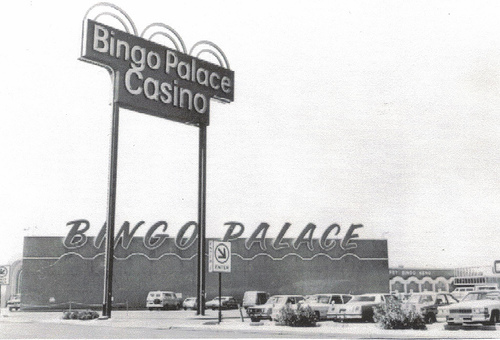
     Frank Junior had connections to multiple casinos in Las Vegas during the heydey of Mafia skimming there. Between his departure from Texas in 1960 and his purchase of "The Casino" with Carl Thomas in 1976, Fertitta went from bellboy to dealer to pit boss to Baccarat manager to general manager at properties including: The Stardust, The Tropicana, The Sahara, Circus Circus, and ultimately The Fremont. "The Casino" later became "The Bingo Palace" which would morph further into Palace Station in 1983, launching what would become a vast "locals casino" empire rivaled only by the Boyd Corporation founded by Sam Boyd. To this day, Station Casinos and Boyd compete as the leaders of this market catering to local Las Vegas residents and casino workers.  

     The jury is still out on how Frank Junior avoided prosecution in the skimming investigations, especially since FBI wiretaps caught him on tape talking about "excess cash" and other veiled references to the skimming repeatedly. A security agent named Harry McBride, who worked under Thomas at the time, also told authorities that there was a "Frank" involved in perpetrating the skimming operation at the Fremont Hotel and Casino. McBride also cooperated with investigators who ultimately turned Thomas as well. McBride testified in a U.S. District Court Case against five members of the skimming ring in 1985. 

      There are no official records I know of regarding any testimony or cooperation on the case offered by Fertitta himself, but I did find one court document in which a name of a witness was redacted, and the person described sounded like Fertitta. My personal theory is that Frank was a secret witness in exchange for immunity from prosecution. Rather than testify in open court, he could have provided background information that helped further the investigation. After all, that might explain why David Helfrey, the chief prosecutor in the 1985 trial cited above, later went to work for Station Casinos in Missouri. If Frank Junior being a snitch sounds too far fetched, consider the fact that Frank "Lefty" Rosenthal (played by Robert DeNiro in Casino) died before the fact that he was a government informant leaked out. 

      Another possibility is that Carl Thomas himself could have requested Fertitta be left alone in exchange for his cooperation. Thomas switched sides during the same 1985 trial in which McBride testified. He obviously had some very incriminating and useful evidence for federal prosecutors about all the players, but he certainly could have left Fertitta out of any information he volunteered. The only other alternative explanation for Fertitta avoiding jail time is that he was an extremely lucky man. 

     For more on the investigations into Mob-influenced Vegas skimming at the time, check out this Dennis Griffin blog, which is the first of three chapters on the whole operation. Like most organized crime schemes, the whole enterprise turned out to be very sophisticated. The movie based on the true events is a bit loose with the facts, and it's really only half the story. 

    Harry McBride would later resurface during a 4-year probe of Frank Junior by the Nevada State Gaming Control Board in the lat 80s. If McBride agreed to testify before the Control Board, it could prove that Fertitta lied about his role in the Argent skimming operation when he applied for his gaming license. Thanks in part to McBride's outright animosity toward a commission member, the vast political connections cultivated by Frank Junior, and also possibly the lack of any criminal penalty for not taking the stand, McBride declined to cooperate with the board. He reportedly also did not think any good would come of him testifying. 


     The final decision on the matter came down to a 2-1 vote to take no action against Frank Junior. Just a few years later, in 1993 (the same year Carl Thomas died), Frank Junior passed the empire to his sons Frank III and Lorenzo. Despite Frank Junior giving up official control of Station Casinos, he spent a great deal of time at the very same property he named "The Casino" when he bought it with Carl Thomas in 1976. Though he was no longer officially in charge, workers at Palace Station would often run into Frank Junior making his rounds or eating lunch there right up until his tragic death on the operating table during a heart procedure in late August of 2009.

      Carl Thomas died a tragic, yet convenient death for a Las Vegas family that later saw their power and influence grow exponentially. Even a pre-planned bankruptcy of the whole Station Casinos chain didn't stop the Fertittas from reigning supreme in the locals market and taking a once little known fight league from barbaric side-show to mainstream attraction. Through it all, Lorenzo and Frank III heeded the example of their dearly departed father. Like Frank Junior--who was a prolific political donor in his day--they always grease the wheels whenever and wherever possible. Both Democrats and Republicans benefit from that family tradition, and if paying off the politicos isn't enough to keep their corrupt actions from being shut down, they also continue to keep up their father's habit of buying a ton of advertising in the local papers to keep mainstream reporters from writing too much about their worst transgressions.       

     Beyond Las Vegas, the Fertittas also have contracts with various Indian-run casinos to manage casino complexes across the country. The Fertittas also do consulting work for casinos and stand at the forefront of the online gaming movement. This quiet expansion is nothing new, which is likely why the Harney County Sheriff's Office received requests for the records of the Carl Thomas crash from the Missouri Gaming Commission and the Indiana State Police Gaming Enforcement Section in 1994. Oddly enough, Nevada gaming officials have never requested accident report copies according to Sheriff Glerup.  

    My own investigation of the records leaves more questions than answers. The first question, and perhaps the most important one is: what caused Thomas to swerve when the crash initiated? Even the most comprehensive forensic examination with all the technology we have even today might run into a dead end trying to answer that one. The fact that the crash happened on a gravel road might mean that any tracks of another vehicle that was possibly involved might not be detected by investigators. Another unanswered question is why was there no testing for drugs when Thomas had cocaine in his pocket at the time of his death? Also, how often are passengers ejected from a vehicle that then rolls over them? Though Sheriff Glerup concludes the ejection and rollover makes it most likely the cause of death was accidental, I really don't understand that reasoning. 

     If the straw and the cocaine were both in his pocket at the time of the crash, it seems obvious to me that Thomas wasn't doing the cocaine at the moment of the initial swerve. So, that can't be the cause. If there was any amount of cocaine in his system, it also seems highly unlikely he fell asleep at the wheel. The only valid explanation in my humble opinion is that he was trying not to hit an animal crossing the road (accident), or another person and/or vehicle was responsible (murder or vehicular manslaughter). Since the area was so remote, there would be no witnesses, and law enforcement would take considerable time to arrive on the scene. 

     Rather than pin this down as an accident, I consider this a cold case that should be classified as unsolved with the official cause of death deemed undetermined. Unfortunately for all who wish to know the full truth, this is one case that will never be re-opened. There's absolutely no possible way of finding out exactly what happened, which makes Jamie Foxx's line at the top of this story so relevant to the situation. If it was murder, it was executed flawlessly. If it was actually an accident, there's still not enough evidence to conclude what really caused the rollover. It's a perfect storm of suspicious, but easily explained away facts that could support either side of the debate. Regardless of how he died, though, without Carl Thomas helping Frank Junior get his start, the Fertitta empire might not exist today. In the same breath, it must be said the death of Thomas also helped guarantee the continuation of that empire that might have been stopped in its tracks if Thomas told the truth in front of those Missouri gaming officials. 

      Those who dismiss the conspiracy theories would point to Thomas not implicating Fertitta when it counted back in 1985. Why would he bother to throw Frank Junior under the bus in front of a gaming commission that didn't have the power to throw him in jail for a long time if he didn't cooperate? Doubters would also point out that Fertitta wouldn't have a formal meeting with Thomas if he knew he was going to have him killed on the trip home. The very fact that at least two gaming authorities wanted to see the crash report proves that even the slightest possible inference of a criminal deed sheds a bad light on any gaming license candidate. Why would Frank Junior risk the suspicion that would surely fall on him? I can only surmise that if it was murder, Frank Junior might not be the one who ordered it. If he was running the Fremont skim for the Kansas City mob as the evidence shows, he could have also expanded to Missouri to appease the next generation of the same Kansas City outfit after the original skim bosses went down. 

      A murder for hire operation of this scope and magnitude, leaving no trace of evidence of a homicide, seems more like the work of a trained and experienced killer used to working in the shadows of the underworld. The hit could have been ordered by someone else deep within the organization who stood to benefit from Station Casinos getting a Missouri license, if indeed it was a sophisticated hit. Then again, who had more to gain than Frank and his family? Therefore, you can't forget the words of another "Lefty" from another movie based on a true story. I'm talking about Al Pacino's character in Donnie Brasco. "When they send for you," Lefty said, "You go in alive, you come out dead, and it's your best friend that does it."

     Regardless of the true circumstances surrounding the Carl Thomas crash, it is a mystery that will follow the Fertitta family for eternity. The ghost of Carl Thomas will haunt the family legacy as long as the facts as we know them are passed down from one generation to the next. The cloud of suspicion will never go away even if speculation of any current mob connections to the Fertittas is unfounded. The fact is, the physical Mafia ties may be long gone, but the organized crime mentality still exists thanks to what Frank Junior passed down to his sons. Everything they do may technically be "legal," but there's a good chunk of activity that could be labeled very close to crossing the line into criminal behavior. Even if you can't call it criminal, you can certainly call it corrupt and underhanded. Go back through their history, and you will find one deftly avoided major scandal after another. From Argent to USA Capital to the orchestrated Station Casinos and Xyience bankruptcies to the dirty dealings of Zuffa over the years, it's all a matter of complicating and obfuscating things just enough to avoid serious lawsuits and/or criminal prosecution. It may not be the textbook definition of "crime," but it's definitely organized. 

Sunday, July 11, 2010

7 YEARS OF BAD LUCK: Station Casinos gets bogged down in Missouri

...after Carl Thomas dies in a mysterious single car accident, everything still goes bad for Frank Jr. and his heir Frank III.

Part Three in a Four-Part Fertitta Family History.

By: Rich Bergeron

Lorenzo and Frank Fertitta III, with father Frank Jr.’s help and counsel, built Station Casinos up from a single off the strip hotspot in Las Vegas into an economic empire other casino barons envied. The empire went public and back to private in the blink of an eye and now stands to face bankruptcy if something drastic doesn’t happen soon.

To help myself understand the current scene a little better, I had to look back to when the oldest brother first put his name on the dotted line. It was Frank III who did the deed, literally. He did it to help the family business get into the hotbed state at the center of Frank Junior’s Mafia connections: Missouri. Home of the Kansas City Civellas for some of Frank’s best early days at the Fremont in Vegas.

The transition to power for the eldest son would not come easy. Frank Junior’s old demons plagued the company yet again during early attempts to expand into Missouri in 1992-1993. Again, another star witness’s testimony before a gaming commission had the potential to cause Frank Junior bigger problems than he could afford. This time it was old friend and business partner Carl Thomas himself who was asked to offer on-the-record insight into the elder Fertitta’s past transgressions. He would never get the chance.

Carl Thomas’ agreement to attend an inquiry with the Missouri Gaming Commission may have been the worst—and last—decision he ever made in his life. The mystery begins with Thomas travelling to Vegas from his home in Oregon to meet with Station executives and discuss his pending testimony. If Frank Junior himself attended the November, 1993 meeting it was the last time he saw his old friend Carl.

Thomas left Vegas alone to return to Oregon before heading to Missouri. Strangely enough, Thomas never made it to Missouri. Instead he died in a still unexplained single car accident.

According to Reporter C.D. Stelzer, The Harney, Oregon Sheriff's Department report shows Thomas died at approximately 4:30 p.m. on Thursday, Nov. 4, 1993, after his car ran off a gravel road in the mountains of Oregon: "The report describes the crash as a "single-vehicle roll over." The crash took place on a straight stretch of Plush Road. The vehicle appeared to have veered off the 18-foot-wide road to the left, came back on the road, spun around twice, rolled over, and came to rest partially on the graded, right shoulder, facing the opposite direction."


Stelzer adds: "At the time of his death, Thomas was driving a 1992 Chevrolet Suburban. Because he wasn't wearing a seat belt Thomas was ejected from the vehicle and apparently crushed when it rolled over. Approximately a half-ounce of cocaine was found in Thomas' jacket pocket, according to the report."

Due to the master skimmer’s untimely death, the Missouri Gaming Commission couldn’t complete their inquiry into Frank Junior and they granted licenses to Station Casinos. Even without Carl Thomas telling his story, the Missouri licenses in St. Charles and Kansas City came only with the understanding that Frank Fertitta Jr. would have absolutely no role in the company's operations.

Whatever really happened to Thomas, it seemed as if his spirit haunted the Fertittas as long as they maintained a Missouri presence. According to Reporter Steve Wiegand, of The Sacramento Bee, in California, "Station was fined a total of $1.9 million between 1997 and 2000 for violations that included dumping fill materials in the Missouri River, allowing a 12-year-old girl to play slot machines and refusing to testify before a state regulatory agency looking into corruption charges." The company surrendered its Missouri licenses and sold its properties there in 2000 amidst an even more intriguing scandal that was apparently overlooked and under reported when it actually happened.

It seemed that even the dawning of a new millenium didn’t prevent the father’s sins and bad Karma from catching up with his sons.

St. Louis Attorney Michael Lazaroff helped the Fertittas break into the Missouri market, but his crude, sloppy methods were later exposed and resulted in more heat than the Fertittas could withstand. According to another C.d Stelzer report Lazaroff later pled guilty in federal court to defrauding his law firm by going off the reservation and taking $500,000 in bonuses from Station. He also pled guilty to defrauding clients, including Station, by padding his expenses.

Stelzer's reports also revealed the following:

Investigators found Lazaroff made 205 private phone calls to former Missouri Gaming Commission Chairman Robert Wolfson on behalf of Station Casinos, which was against state law.

Testifying before the commission in August of 2000, Lazaroff said he used his personal relationship with Wolfson to increase Station's chances of getting their Kansas City gaming licenses. Lazaroff also testified that Station officials knew exactly what he was doing.

"They from time to time would ask me to run things by Chairman Wolfson and see what he knew about it," Lazaroff testified.

Station officials vehemently denied they knew Lazaroff was doing anything improper. Still, they declined to testify at public hearings, despite subpoenas. A Station attorney objected to the hearing being public and voiced frustrations over not being able to cross-examine Lazaroff.

But, that’s only half the story. Ambitious, go-getting former Riverfront Times Reporter C.D. Stelzer levels even more outrageous accusations against his own colleagues in the media and Station executives surrounding Station’s Missouri days. Here are all of the “Media Mayhem” blog postings by C.D. Stelzer, which lay it all out in a number of in-depth stories.

David Helfrey (pictured), Station's outside counsel in Missouri, had an interesting background. Perfectly suited for the occasion, Helfrey was a federal prosecutor in Kansas City before deciding to turn to a career as a criminal defense attorney. Exactly what led him to make such a drastic career move is unknown, but my instincts tell me it might have had something to do with the government paychecks not being big enough for busting open the Mob's Vegas piggy bank. Helfrey must have been pretty hard up to do such a complete 180, easily assuming a role as the unofficial Fertitta Family consigliere in Missouri after years of prosecuting so many of Frank Junior’s old associates.

Helfrey definitely knew all about the Fertitta family's background. While working as a prosecutor, he would have had to review and be familiar with FBI transcripts that recorded Frank Junior in conversations related to casino skimming operations orchestrated by Carl Thomas. FBI tapes of Thomas himself mention Fertitta repeatedly as being a part of his crew, a crew that bilked the Argent casinos out of millions and funneled much of their Vegas proceeds to Mafia families in Kansas City, Milwaukee, Cleveland and Chicago. Helfrey worked on those cases and knew all the usual suspects well. Looking back, Helfrey’s interaction to help Frank Junior’s family business in Missouri is not only ironic but also extremely telling of something bigger going on behind the scenes.

Even before I found this information about Helfrey on Stelzer's blog I had long suspected that Frank Fertitta, Jr. and Carl Thomas both cooperated with the government to save their skins. If that is true, of course it would be essential to keep the whole matter an untold secret forever. The Mafia’s “Oath of Omerta” places made men in the organization in a position that forbids them from revealing any family secrets. The “rat” is the most unforgivable scum on the face of the earth in Mafia tradition, and all rats are punishable by death.

Yet, if it wasn’t for the rat’s existence, the worldwide power of La Cosa Nostra would be inconceivably and exponentially stronger than it is today. With the help of the Federal Witness Protection Program, even a "made" turncoat like Sammy "The Bull" Gravano bucked the rat rubout trend and moved on relatively unscathed after corroborating with the government against his high level Mafia associates. More than ever in this day and age the organized families have had to burrow their operations further and further underground, cut out the swaggering old-school bravado, and crack down on risky behavior that leads to government investigations. Those investigations typically start small, with a “little fish” being hooked as a primary low-level informant to take out all the bigger fish, exactly like a rat infected with Bubonic Plague biting everyone it can before it goes down itself.

As I know all too well now from my own family’s law enforcement history, the government has also experimented with recruiting big fish informants in the hope that they will be able to devour all the little fish criminals beneath them and around them. The theory must be: if the process works one way it could work the opposite way, too. This means that our own government sometimes works directly in coordination with known mass murderers, drug kingpins, master extortionists and leg breakers. A few casino skimmers cooperating with the government doesn’t seem too far fetched in that context. I'm not sure if any "big fish" operations were hugely successful, but 20/20 hindsight in some of the government's most high-profile interaction with "big fish" reveal that the technique was often a miserable failure (see Osama Bin Laden and James Whitey Bulger).

Next time you go fishing, I wouldn't recommend throwing a giant fish on a rope into the depths hoping it will eventually swallow a smaller one. Even if that angling technique were to miraculously work for you, it's certainly not practical. Eventually the fish either escapes or stops working for you. As an avid fisherman myself, I recommend sticking to the bait bucket full of shiners. You'll catch much more prey in the long run by putting small guys out there for the big guys to eat up with your hook.

Under another 20/20 hindsight analysis, perhaps, Frank Fertitta, Jr. decided to become a Whitey Bulger-esque “top-echelon informant” for the FBI. After all, it was just recently reported in the Las Vegas Review Journal that none other than Frank “Lefty” Rosenthal served as just such an informant for the FBI. Rosenthal’s secret only surfaced after his recent death of a heart attack.

If Frank Junior did inform on his associates secretly, David Helfrey’s coming to the aid of Station Casinos is likely not a mere coincidence.

Helfrey’s transition to a criminal defense lawyer from a federal prosecutor obviously rises to the level of curiosity, but it’s not unheard of by any means. I’m sure it’s not at all that uncommon for state and federal prosecutors to get burnt out and grow tired of government service. The private sector can be lucrative as an attorney, and some hardened prosecutors maybe even develop a soft spot eventually for the innocent guys they sometimes have to go after, the folks who get convicted before the right evidence is revealed to show they didn’t do it.

So, the fact that Helfrey changed careers is not the real surprise. What is really amazing is how Helfrey so zealously went from going after the old Vegas skimming operations to trying to cover them up as far as Frank Junior’s involvement. It doesn’t compute when you try to reconcile the fact that Helfrey heard all the evidence incriminating Fertitta for his role in the Argent skimming but then went to bat for the same guy to help get him another casino license he could potentially utilize to skim again for the same Kansas City organization. It all makes a heck of a lot more sense to surmise that Helfrey didn’t help Frank Fertitta, Jr. in Missouri for nothing. Maybe Helfrey instead acted out of a sense of loyalty to Fertitta for Frank’s help in bringing down his former KC Mob associates, which paved the way for Helfrey to start his own successful law practice. Helfrey had been the lead prosecutor in the mob trial in which Frank Junior was revealed to be an associate of organized crime, and the lead investigator in the case was then-FBI agent Gary Hart, who was also Helfrey's law partner in 2000 and still works at Helfrey’s firm today. Both just might have worked in concert under the auspices of their firm to return the favor Fertitta may have done for them in the 80s by turning State’s evidence on the sly.

Fertitta and Thomas were friendly enough to buy their own casino together, but did they sing together as well? It would certainly explain the balls to the wall approach Helfrey took in support of the Fertitta family. Though, corruption, greed, and a complete lack of a moral backbone could also explain Helfrey's huge change of heart. Nobody really knows the real answer at the moment, but it certainly begs further examination in light of Lefty's post-mortem revelation.

At one of the Missouri hearings regarding Station Casinos, as described by Stelzer, retired FBI agent and former Gaming Commissioner William Quinn testified. Quinn detailed three meetings he had with Helfrey when the former federal prosecutor was acting as Station's lawyer. The two already knew each other because they both worked together on the Strawman cases. The overall FBI operation the two men helped build resulted in the conviction of 19 Mafia members in the Midwest, including the Civellas brothers of Kansas City. The investigations and prosecutions shattered skimming operations at the Hacienda, Fremont, Stardust and Tropicana casinos in Vegas.

Quinn testified that, on one occasion, Helfrey asked him to meet with him and a Station's representative. Quinn also revealed that Helfrey came to Station’s rescue in Missouri only after the Lazaroff scandal broke. However, Quinn discovered that Helfrey was already representing Station in a legal capacity in other matters before Lazaroff went completely off the reservation in Missouri.

To make matters worse for Helfrey, if the attorney did obtain a meeting with Quinn including a Station’s representative, such a meeting would have been in violation of the Commission's "ex parte" rule. The “ex parte” rule was set up in 1994 to make sure that state gaming commissioners did not fall under the influence of the casinos that they were supposed to be regulating. Quinn said he was concerned about his former colleague's suggestion and he refused to meet with Helfrey and the Station's representative.

On behalf of Station Casinos, Helfrey went after Lazaroff with particular intensity, and the crooked, influence-peddling lawyer was an easily intimidated target. He reportedly attempted to take his own life after being caught up in the Station scandal in Missouri, and he told anyone who would listen that he feared the possibility of being rubbed out. Lazaroff retained state police protection during and after the Missouri Gaming Commission hearings that were held in Jefferson City in the summer of 2000 as a result. The embattled lawyer even claimed that Helfrey personally delivered a veiled death threat. Helfrey could be a very imposing person, and Lazaroff himself testified as much:

QUESTION:

“Okay. Did you have any further meetings with -- with Mr. Nielson while he was in the area?”

LAZAROFF’S ANSWER:

“Yeah. Monday, December the 6th we met at the law office of Arthur Margulis, and it was Mr. Margulis and myself, Rich Haskins, Scott Nielson and David Helfrey. And during that meeting Mr. Helfrey said words to the effect of, we don't think that the Commission has anything. We have your sworn testimony that you did not have ex parte conversations. And there will -- there will undoubtedly come a time where you'll be tempted to lie in order to save yourself because of all of these other problems that you have, but we know that you'll do the right thing. Okay? And that was repeated. And I remember walking out of that meeting and turning to Scott and said, I don't want to meet with that guy ever again. He scares the Hell out of me. And Scott said -- said to me, he scares the Hell out of me too.”

Lazaroff was eventually prosecuted for his multiple crimes, and he even pleaded guilty, but not before he rolled over on many of those he had bilked money from in the first place, including Station Casinos executives. In return, U.S. District Court Judge Charles Shaw gave him the country-club treatment. Lazaroff was sentenced to 30 days in jail, 90 days' house arrest in his Town & Country manse, 120 days' community service and restitution.

Station Casinos was finally forced to pull up stakes and leave Missouri like a dog with its tail between its legs in the closing days of 2000. A November 29, 2000 Las Vegas Review Journal article reported: “Station Casinos' Missouri license renewals were rendered unlikely by a disciplinary cloud hanging over the company. Six company officials refused to obey subpoenas to appear at an August meeting of the commission."

Carl Thomas died in early November of 1993, and exactly 7 years later Station Casinos found itself embroiled in hearings and investigations that would lead to their ouster from Missouri on bad terms. The state gaming commission eventually voted unanimously to strip Station and its top executives of their Missouri licenses. Station also agreed to pay a $1 million fine in November of 2000. A voluntarily surrender of its licenses precluded Station’s departure from the state for good late that year.

During his hiatus from holding the full official, financial and managerial reigns of Station Casinos Frank Fertitta Junior has maintained his land buying and trading ways, given a great deal of cash to charities and civic interests, and laid relatively low other than his various publicly reported Republican Campaign contributions.

12 years ago Mother Jones Magazine ranked Frank Junior in a tie for the 10th spot for America's political contributors who work in the shadows. He and the rest of the family and business interests have loyally given hundreds of thousands, if not millions of dollars to political figures from local judges and sheriffs in Vegas to presidential campaigns Like Rudy Giuliani’s recent failed bid for Mayor of America. It is an old Texas family tradition to pay it forward to politicians, grease the wheels, and prosper. I counted one year’s political contribution records that showed Fertitta family and business interests gave a combined $65,000 to Las Vegas Sherriff Doug Gillespie’s unopposed campaign for the seat.

Frank Junior himself gave Gillespie $5,000, each of his sons gave $10,000, Wife Victoria Fertitta gave $5,000, and Fertitta Enterprises gave yet another $5,000:


As for the guy Gillespie replaced, the retiring Sheriff Bill Young found fast work. A 2007 Las Vegas Review Journal report explained:

“He [Young] will oversee 630 workers and the security and surveillance operations for Station Casinos' 16 properties in Southern Nevada. Young would not reveal his new salary, but it was expected to top his annual salary of $134,263 he earned as sheriff.”

Station Casinos even put out campaign flyers for currently-sitting Clark County District Court Judge Timothy Williams’ successful campaign for the bench. The company publicly endorsed him for his judge’s seat. Williams was the first judge to oversee my existing case against Xyience. When I raised the issue that the judge’s own Web-site showed the Station Casinos endorsement letter, Williams did not recuse himself, although he did rule in my favor in the first hearing I was actually able to appear at.

I have even heard that Frank Junior still does butt into some Fertitta Enterprises company business, and some inside sources have told me Frank Junior put some of his very own money behind the $12 million Xyience bailout. Perhaps the most interesting aspect of Frank Junior’s life that I’ve discovered in my investigations is that I’m told he goes to church services every single day. I’m sure the question’s been asked a billion times or more, but yet again it reveals itself here: can one be loyal to God and Mob at the same time?

Looking back it's easy to see how Frank Junior’s blacklisted enterprise could only expand itself for so long in the same place. It's easy to imagine the pressure he must have felt to get out of the town that wouldn’t let him take an inch of new gaming territory without a fight. Yet, he could not escape his reputation by crossing state lines. His organized crime history still impacted the Missouri situation heavily. The state only opened up for the Fertitta family because of the tragic and suspicious death of someone who could have stopped the whole operation cold just by telling the truth about what he knew about Frank Junior's past. Whatever happened on that stretch of farm road in Oregon in November of ‘93 is only known by one entity who’s willing to protest, and it seems that entity is the curse of Carl Thomas.

In our next installment we’ll explore the current Fertitta Empire, including the Zuffa purchase. We’ll focus on the folks I call “The Brothers Fertitta” and their billionaire boom days. We’ll also lay out exactly why Station Casinos now faces a flat out financial bust due to overbuying land and gambling on better days for the Vegas suburbs hit hardest by the housing crisis.